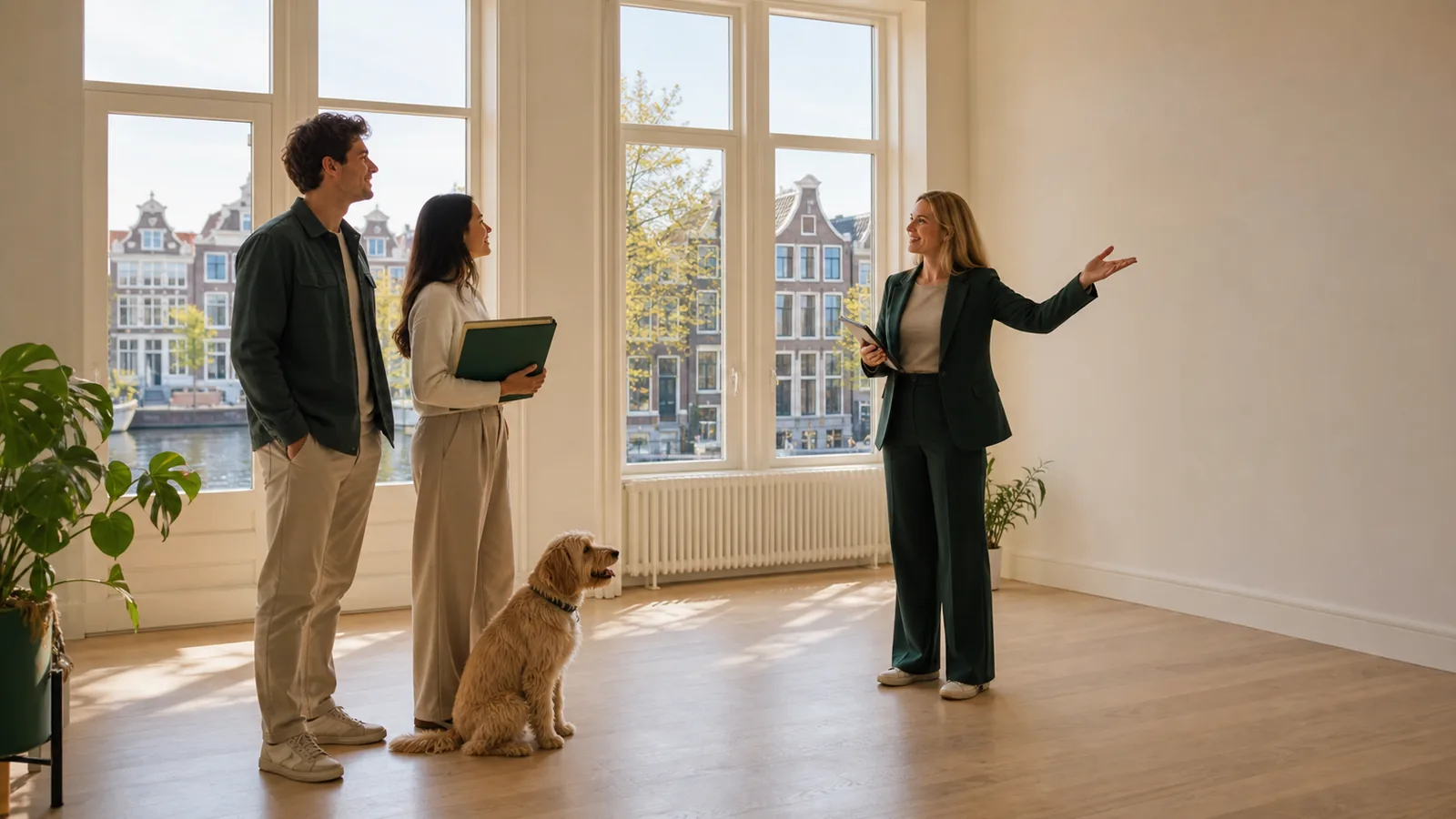
Finding pet-friendly housing in the Netherlands: an Amsterdam expat guide
A practical rental search plan for pet owners, from listing filters and a pet profile to written permission, deposits and a calm move-in.
Finding a rental home with a dog or cat in the Netherlands is usually a screening and communication problem rather than a separate housing category. Listings may say that pets are allowed, prohibited or only considered after discussion. When the wording is unclear, ask before applying and get any permission in writing before you sign.
Amsterdam's competitive market rewards preparation. A concise application file, realistic housing criteria and a calm description of your pet can help an agent or landlord assess the actual situation instead of imagining the worst-case scenario.
Search beyond the words 'pets allowed'
Use both English and Dutch terms such as pets allowed, huisdieren toegestaan, huisdieren in overleg and geen huisdieren. A listing that does not mention animals is not automatic permission or rejection; it is a prompt to ask a precise question.
Filter for the practical needs of your animal as well. A ground-floor home, lift, nearby green space, secure balcony or quieter street may matter more than an attractive interior. Expanding the search area beyond central Amsterdam can also create more realistic options.
- Animal type, age, size and number of pets
- Indoor routine and normal time left alone
- Access needs such as a lift or secure outdoor space
- Commute and reliable daily walking arrangements
Build a useful pet profile, not a sales brochure
A one-page pet profile — often called a pet CV — can answer the questions a landlord is likely to have. Include a recent photo, age, size, training, home routine, vaccination or registration information where relevant, and a reference from a previous landlord or sitter if you genuinely have one.
Keep every claim accurate. Do not describe a dog as silent or perfectly trained if that is not true. It is more credible to explain how you prevent nuisance: exercise before work, a midday walker, scratch protection, regular grooming or a plan for care during travel.
Never include passport numbers, bank details or unnecessary identity documents in a pet profile. Share only what the housing decision requires.
Check the contract and house rules before signing
Dutch tenancy agreements can include house rules, and pet permission may be addressed in the listing, contract or building regulations. Read all three and ask the landlord or agent to confirm the agreed position in writing. A verbal 'probably fine' is difficult to rely on later.
This guide cannot decide whether a particular clause is enforceable in your circumstances. If the contract conflicts with what you were promised, or a dispute has already started, obtain advice from a Dutch tenant-support or legal service before taking action.
Understand the deposit limit
For Dutch tenancy agreements dated 1 July 2023 or later, the government states that the maximum security deposit is two months of basic rent. Do not casually offer an extra 'pet deposit' on top of the legal maximum to make an application look stronger.
Protect both sides with a detailed check-in report and dated photographs of floors, doors, walls and furnishings. Pay traceably, keep the receipt and record any existing damage before moving your pet into the property.
Reduce risk during the first weeks
A new home can temporarily change behaviour. Keep feeding, walking and sleep routines predictable, introduce shared corridors calmly and do not leave a dog alone for a full workday immediately after moving.
Give neighbours a respectful way to contact you if they notice persistent noise, without sharing more personal data than necessary. Arrange a walker or sitter before your first long office day so the care plan is tested rather than improvised.
Avoid rental scams while moving quickly
Pressure to secure a home can make pet owners vulnerable. Verify the property and the identity or authority of the person offering it, inspect the home when possible, read the full agreement and be cautious about transferring money before the arrangement is verifiable.
Keep application documents proportionate and use secure sharing methods. A legitimate need to assess a tenant does not require you to send every sensitive document to every listing contact at the start of a conversation.
Set up pet care before your first long day away
Browse care profiles and discuss your pet's routine, access arrangements and preferred updates after the move.
Find pet careFrequently asked questions
Are pets automatically allowed in Dutch rental homes?
Do not assume so. Check the listing, tenancy agreement and applicable house rules, ask before signing and keep the answer in writing.
What should a pet CV contain?
Use a short factual profile with a photo, age, size, training, normal routine, relevant care information and a genuine reference if available. Avoid sensitive personal data.
Can I offer an additional pet deposit?
Be careful. For agreements from 1 July 2023, the government's stated maximum security deposit is two months of basic rent. Do not offer an extra amount that would exceed that total.
Should I hide my pet until after signing?
No. Concealing the animal can create an immediate trust and contract dispute. Ask early enough to make an informed decision and document the response.
Sources and review
External rules and prices can change, so we show the source and review date.
- Government of the Netherlands — Step-by-step plan for tenants ↗
- Government of the Netherlands — Rented housing ↗
Sources checked on: