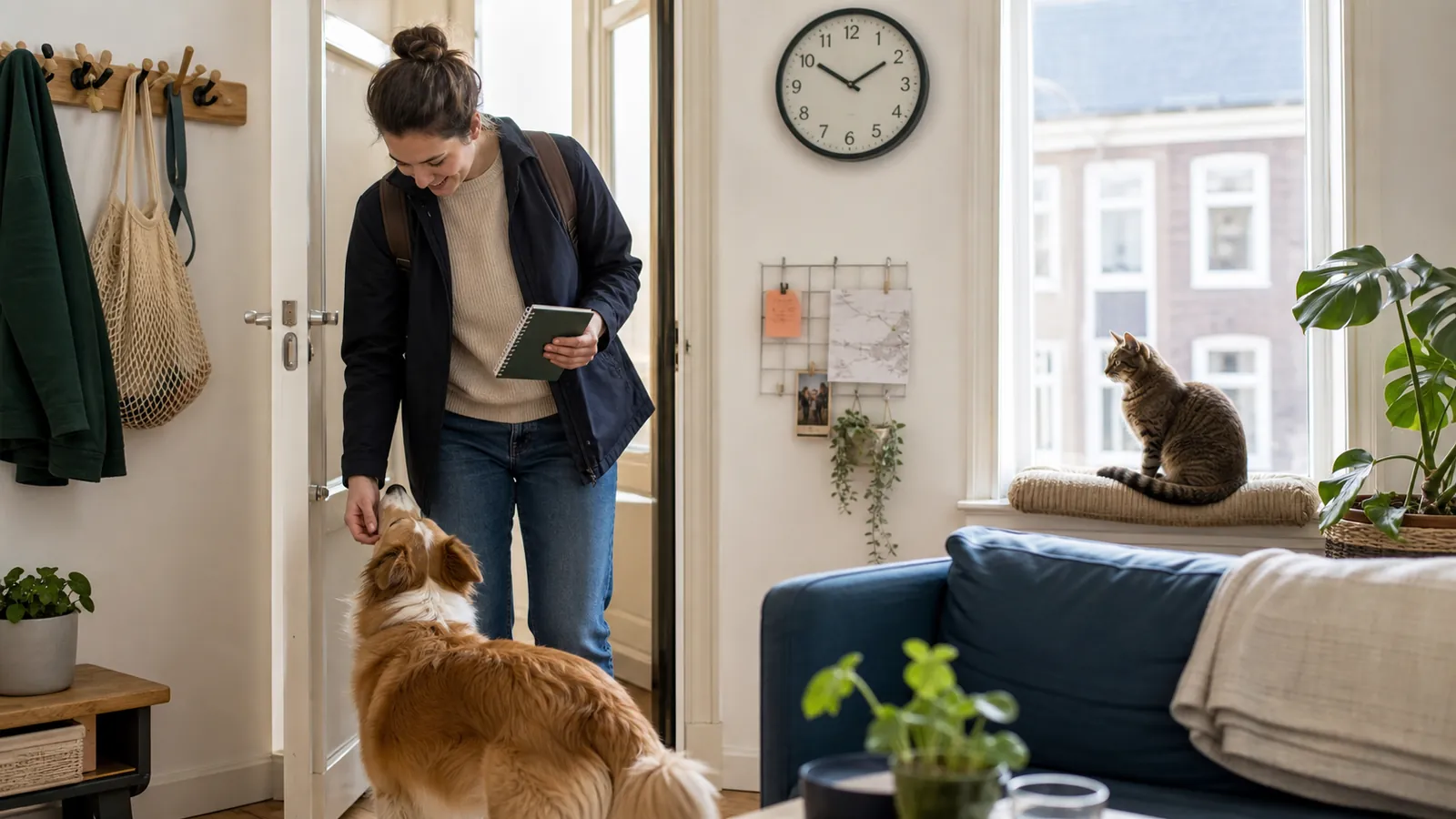
How many drop-in visits does your pet need while you are away?
Choose visit frequency using species, age, health, routine, time alone and the full length of your trip.
Lees in het Nederlands →There is no responsible standard number for every pet. Visit frequency must cover normal needs and prevent the animal going too long without an appropriate check, exercise, toileting opportunity or social contact.
Start with an ordinary day's routine. Then decide whether defined visits are sufficient or broader pet sitting better fits the total absence.
Assess every animal individually
Species, age, health, diet, medication and behaviour combine to shape the care schedule. An independent adult cat has a different routine from a puppy, senior animal or pet that struggles with being alone.
For medical questions, follow individual veterinary advice. A general article must never replace a prescribed medication or monitoring schedule.
Calculate the time between visits
Do not look only at visits per calendar day. Record when one visit ends and the next starts; that interval determines how long the animal is without care.
Include departure and return days. A late first visit or early final visit can accidentally create a much longer gap than on the middle days of the trip.
- Feeding and medication times
- Toileting and exercise needs
- Appropriate maximum alone-time for this animal
- Temperature and conditions at home
- Duration and scope of each visit
Choose broader care when visits are not enough
If the required frequency becomes impractical or your pet needs longer presence, pet sitting may be more suitable than separate visits. Check which variants a provider actually offers.
For a dog, one short check does not automatically provide enough exercise or company. For a cat, leaving food without observation, hygiene and suitable interaction is not a complete plan either.
Plan around the most care-intensive part of the routine, not the minimum number of visits that happens to fit the calendar.
Prepare both a primary and backup plan
LICG advises written care instructions, enough supplies, veterinary details and emergency contacts. Test access and arrange a local backup person for illness or a key problem.
Request the agreed update after each visit. Define when unusual eating, behaviour, toileting or signs of illness require contact and what the sitter is authorised to do next.
Plan drop-in visits for your trip
Discuss a frequency and duration that cover your pet's complete routine while you are away.
View drop-in visitsFrequently asked questions
Is one daily visit enough for every cat?
No. Age, health, feeding, behaviour, visit duration and time between checks determine what fits the individual cat.
Can drop-in visits replace a full day of dog care?
Not automatically. Assess exercise, toileting, company and total time alone. A broader sitting arrangement may fit better.
What if the regular sitter becomes unavailable?
Arrange a backup contact, safe alternative access and written instructions that can be handed over before your trip.
Sources and review
External rules and prices can change, so we show the source and review date.
- LICG — Going on holiday while your pet stays home (Dutch) ↗
- LICG — Leaving a dog home alone (Dutch) ↗
Sources checked on: